


How Defense Manufacturers Can Ramp Up 155 mm Shell Production
It was over three years ago, in February 2022, when Russia launched its full-scale invasion of Ukraine. The aftershock of the first 155 mm artillery shell fired can still be felt in defense manufacturing circles today.
According to Ukraine’s Oleksandra Ustinova, who serves on Ukraine’s wartime oversight committee, the country is firing 6,000 to 8,000 rounds of 155 mm shells a day. Other sources claim Ukraine was firing as many as 10,000 rounds at its peak. The U.S. has shipped more than 3,000,000 artillery rounds and Kyiv is desperately seeking more.
While actual data on ammunition stockpiles is understandably a well-guarded secret, we can infer that inventories are dwindling because we know domestic manufacturers simply can’t keep up with demand. It is the perfect storm no one saw coming; a storm that defense producers can weather effectively with the right support teams at the table.
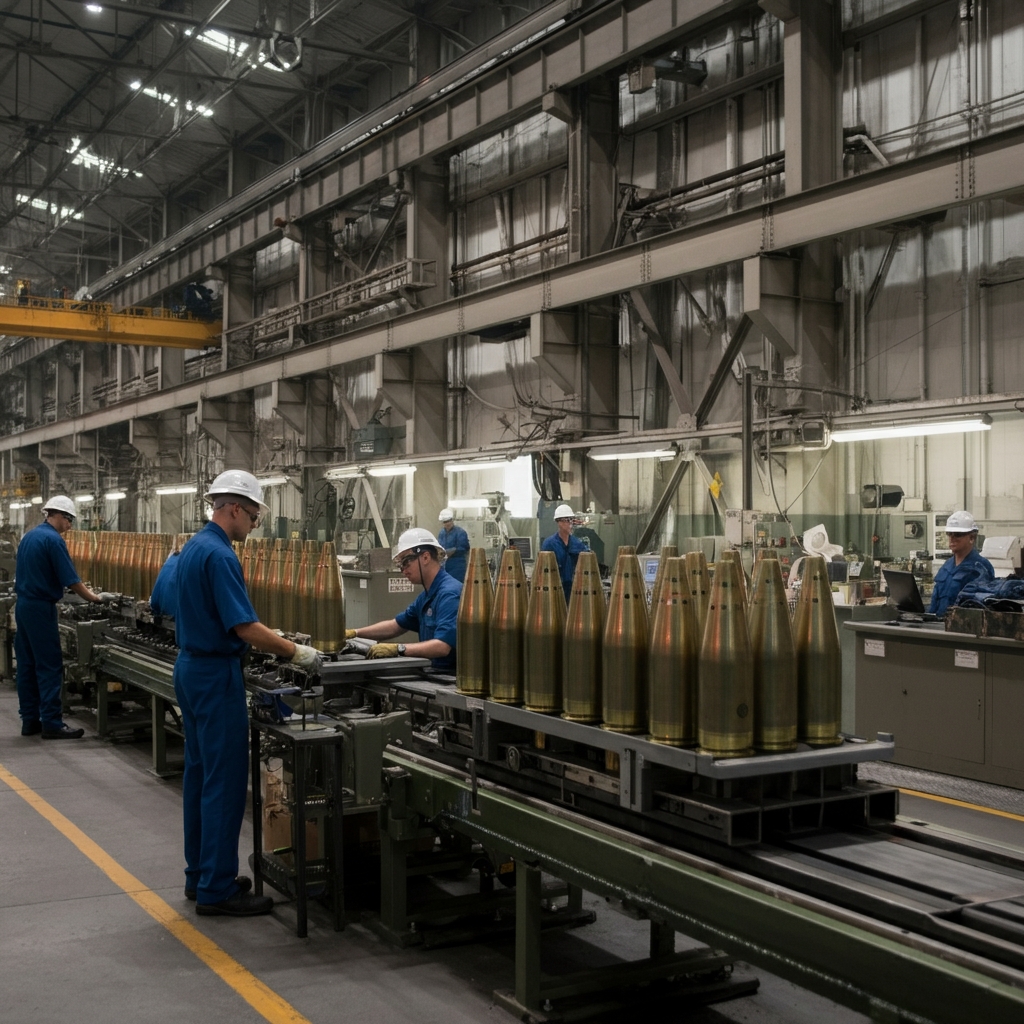
155 mm Artillery Shell Manufacturing: Key Facts
155 mm ammunition dates back to the late 1800s and was used extensively in both World War I and World War II. Some of the machinery currently used to manufacture 155 mm shells was developed as far back as World War II, and even the more “modern” lines date back to the 1980s.
While some U.S. manufacturers had high hopes for their existing lines and systems, they’ve discovered that by pushing this legacy equipment to the max, they are uncovering issues due to failed “quick fix” strategies, increased maintenance and downtime, and reduced production targets through a lack of production line automation.
After the Russian invasion, Ukraine started collecting all of its allies’ older 155 mm ammunition. The U.S. and Canada sent over whatever stockpiles they felt they could afford, along with other NATO member countries. Now inventories have been depleted and the existing manufacturing lines can’t keep up with Ukraine’s requests, let alone replace inventories to their former levels. There are few suppliers, the production systems are slow and inefficient, and the product now costs more than it should.
Defense Firms Race to Make 155 mm Shells
As U.S. policies continue to prioritize national security and economic self-reliance, many allied nations are following suit, investing heavily in their own defense production capabilities to reduce dependency on foreign supply chains. Poland, for example, was reported to have completed defense procurement deals with U.S. firms valued at over $15 billion, but is now looking inward and building three defense production plants on home soil so the country can be self-sustaining in its national security measures. Other countries such as Australia, Estonia and Ukraine are also in the process of recalibrating their defense procurement strategies to move production in-house.
Despite the 155 mm shell being a workhorse for decades, it is still ripe for innovation. New developments in precision guidance systems, increased range through leveraging base bleed, increased explosivity, and interoperability are all taking the 155 mm footprint to new horizons. Now it is up to defense manufacturing firms to keep pace with demand and innovation, and with stockpiles disappearing, they need to act fast. Except haste makes waste.
“We’ve been hearing from others in the industry that some press manufacturers are coming in with aggressive pricing and quick delivery promises,” says Jeffrey Walsh, Director of Business Development with Macrodyne Technologies USA Inc. “But when it’s time to go to market, the systems often aren’t fully functional, and the startup phase drags on far longer than anyone expected. There’s a big difference between having a machine on the floor and having one that’s truly production-ready. That gap can cost valuable time.

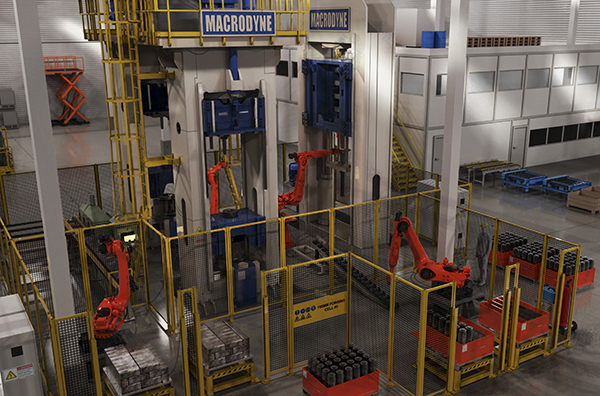
“In many cases, the approach seems to be: go with the cheapest and fastest option and hope for the best. But hope isn’t a strategy. These systems involve thousands of critical decisions, and if even a few go sideways, you’re looking at delays, troubleshooting, and downtime. That’s time clients simply don’t have. Our approach is different: we build in the extra effort up front, taking a more risk-averse path so that when the press hits the floor, it’s ready to perform from day one.”
One of Macrodyne’s risk-mitigation strategies is that, rather than invent new technologies to complement its press and automation systems, the company partners with consultants and outside suppliers that already have that expertise. By using proven heating systems, proven welding systems, etc., defense manufacturing firms can reduce the risk involved.
Macrodyne’s comprehensive project management approach, complete willingness to partner with clients, and 30-year history in manufacturing mean the company is ideally positioned to partner with defense contractors and address the 155 mm shells inventory crisis.
“We are different than other suppliers,” says Jeffrey. “We listen to the client, we get involved. We don’t just hand them a catalogue and ask, ‘What do you need?’”
More than a press manufacturer, its expertise in material handling, automation and quality-control systems enables Macrodyne to be that one trusted source.
“From the steel bar coming into the factory, to being cut, heated, forged, cooled, heat-treated, machined, banded, washed, painted, tested, and crated, we can go from one end to the other,” Jeffrey elaborates. “In fact, we can take it one step further and provide a facility where we can fill all the shells.” Macrodyne’s full-range expertise can thus significantly boost speed to market.
If you’re involved in 155 mm shells manufacturing, you know the window to act is shrinking. Contact us now to learn how we can help you get caught up on 155 mm shell production. You can also visit the Defense Presses page on Macrodyne’s website to learn more.
